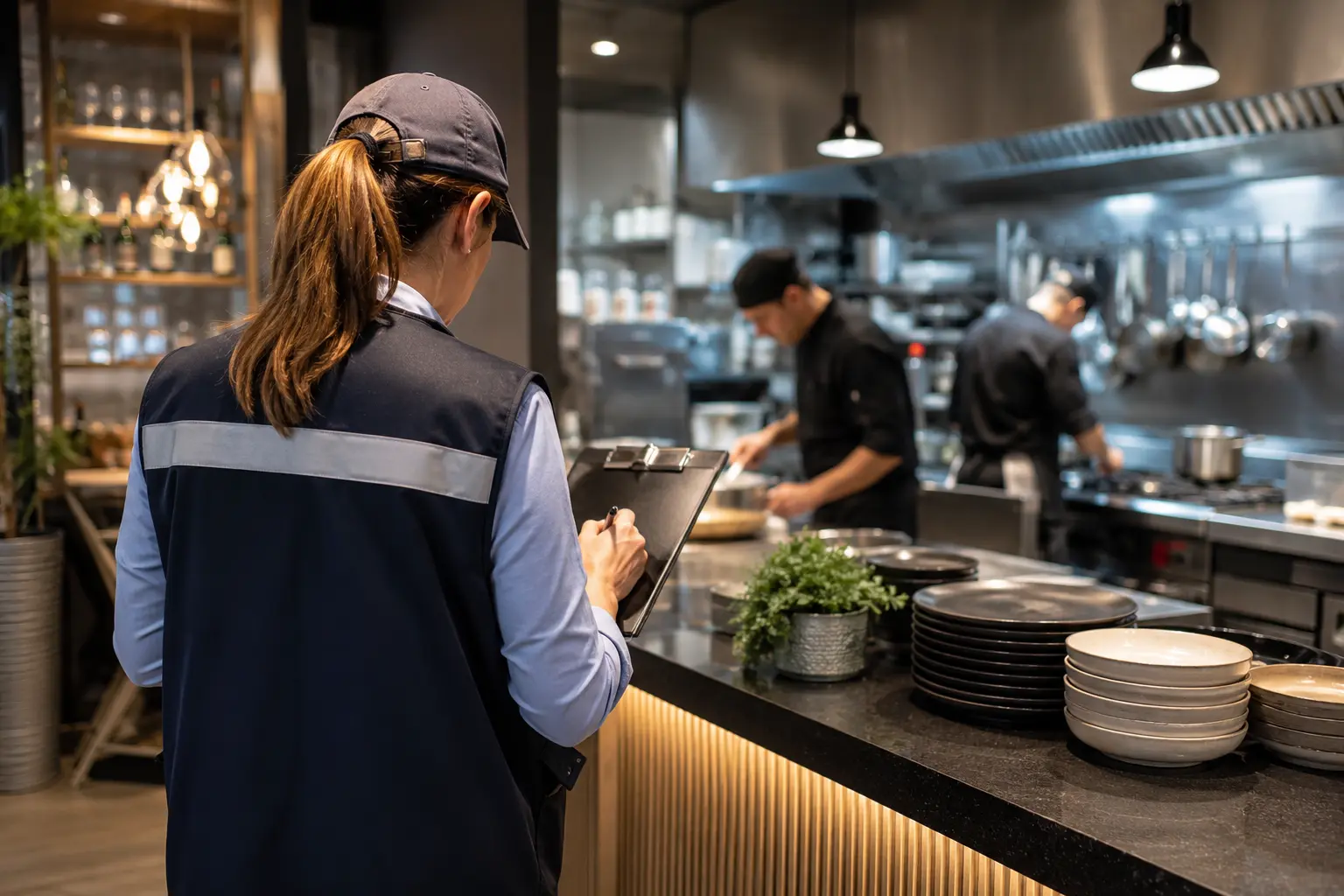
ASAE Inspections in Restaurants: The 7 HACCP Mistakes That Cost the Most in the Algarve
An ASAE inspection can come at any time — and in the Algarve, during peak season, the odds go up significantly. Fines for HACCP non-compliance in restaurants can reach €15,000, not counting activity suspensions that destroy reputations built over years.
If you run a restaurant, bar, snack bar or esplanade, this guide walks you through the most common HACCP mistakes ASAE detects — and how to avoid them before inspectors knock on your door.
Why is ASAE stepping up inspections in the Algarve?
The Algarve draws some of the highest tourist flows in the country. With more customers, more staff turnover and more operational pressure, the risk of HACCP system failures rises exponentially between May and September.
ASAE is the national authority responsible for food safety enforcement in Portugal, with the power to issue fines, suspend activities and seize products whenever it detects breaches of hygiene rules and the HACCP system. In recent operations, ASAE has opened dozens of administrative offence proceedings for failure to implement HACCP, breaches of hygiene requirements and gaps in mandatory records.
And here’s the critical point: it’s not enough to have the HACCP file tidied away in a drawer. HACCP is a daily system, with records, monitoring and actions that happen several times a day — and that is exactly what ASAE wants to see actually working.
So what exactly is the HACCP system?
HACCP (Hazard Analysis and Critical Control Points) is a preventive food safety system that identifies, assesses and controls the hazards that can compromise food safety — whether biological (bacteria, viruses), chemical (residues, detergents) or physical (glass, metal).
Its application has been mandatory since the publication of Regulamento (CE) n.º 852/2004, complemented in Portugal by Decreto-Lei n.º 113/2006. Every food business operator — including any restaurant, café or catering unit — must implement, apply and maintain procedures based on the 7 HACCP principles.
The 7 HACCP principles (practical version)
- Identify hazards that must be prevented, eliminated or reduced
- Determine the Critical Control Points (CCP) — stages where control is essential
- Establish critical limits for each CCP (e.g. temperatures)
- Monitor each CCP with effective oversight
- Define corrective actions for when something falls outside the limit
- Verify regularly that the system is working
- Document and record everything properly
It sounds simple on paper. In practice, that’s where 90% of inspection failures live.
The 7 mistakes ASAE penalises most in restaurant HACCP
1. Blank (or made-up) temperature records
The most common mistake — and also the most obvious to any inspector. Refrigeration units and freezers must have daily temperature records, and ASAE can immediately spot when records were “filled in at the last minute” before the inspection.
What to do: Implement digital records or set up clear monitoring routines with named responsible staff on each shift.
2. Generic or outdated HACCP plan
Many restaurants bought a generic HACCP manual five or ten years ago and never touched it again. A HACCP plan has to reflect the reality of your kitchen today — production flowchart, current suppliers, hazards specific to the dishes you serve.
If you’ve changed the menu, opened a new esplanade or started working with raw products (sushi, tartares, ceviches), the HACCP plan has to be reviewed.
3. Pest control failures
Pest control is a direct prerequisite of HACCP. Without it, the whole system is compromised. ASAE checks reports from a specialist company, the monitoring plan and the presence of properly identified bait stations.
The absence of a contract with a certified company or of up-to-date reports is a serious failure, especially in the coastal areas of the Algarve where pest pressure is high.
4. Missing or undocumented staff training
Food safety training is mandatory for all staff who handle food. And more than that: ASAE requires documentary proof of that training.
At a time when staff turnover in the Algarve is high (especially seasonally), it’s common to find entire teams without valid training. The result: a guaranteed fine.
5. Broken traceability
Knowing where each product comes from and where it goes is the basis of traceability. Lost invoices, unrecorded batches, products transferred into unlabelled containers — these are all red flags in an inspection.
Rule of thumb: any product in your kitchen must have a traceable origin and a visible use-by date.
6. Cleaning without a plan or without certified products
It’s not enough to clean — you have to prove how, when and with what you clean. The cleaning plan should specify the products used (with technical and safety data sheets available), frequencies, methods and responsible staff.
Household detergents or products without professional labelling are automatically a problem.
7. Confusion between clean and dirty zones (cross-contamination)
Cutting boards used for both raw meat and cooked vegetables. Kitchen cloths that move between the toilet and the worktop. Cold rooms where raw fish sits above ready-to-eat products. Cross-contamination is perhaps the risk that causes the most harm to consumers — and ASAE knows it.
How much can a poorly prepared inspection cost?
Fines for breaching HACCP rules generally range between €150 and €15,000, depending on the offence and on whether it involves an individual or a company. In more serious cases, ASAE can:
- Suspend the activity of the establishment, in full or in part
- Seize products and equipment
- Bring criminal proceedings in cases involving unfit foodstuffs
For a restaurant in the middle of summer in the Algarve, a one-week activity suspension means not only lost direct revenue but also cancelled bookings, broken contracts with hotels and damage to your online reputation.
How to prepare your restaurant for an ASAE inspection
The good news: staying compliant isn’t complicated — it’s about being consistent. Here’s a practical checklist:
✅ HACCP plan up to date and adapted to your real operation
✅ Daily temperature records (cold, hot, receiving)
✅ Up-to-date pest control contract and reports
✅ Training certificates for all staff
✅ Invoices and traceability organised and accessible
✅ Cleaning plan with product technical data sheets
✅ Clear identification of zones, equipment and products
✅ Periodic internal audits (monthly or quarterly)
Is specialist support worth it?
Legally, hiring a HACCP consultancy is not mandatory. The law requires compliance, not the hiring of an external body.
That said, the reality for restaurants in the Algarve shows that managing HACCP in-house, alongside the daily running of a kitchen in peak season, is practically impossible without compromising either the operation or the system. Specialist support ensures the plan stays up to date, that records are auditable and that the team is always prepared — before ASAE arrives, not after.
Fines up to €15,000. Activity suspension. Reputation destroyed.
That’s what’s at stake in a poorly prepared ASAE inspection.
Fiscal Control makes sure your restaurant is never exposed — with an up-to-date HACCP plan, a trained team and direct support during inspections.
No obligation. Personalised response from a FiscalControl technician.
Leave a Reply